
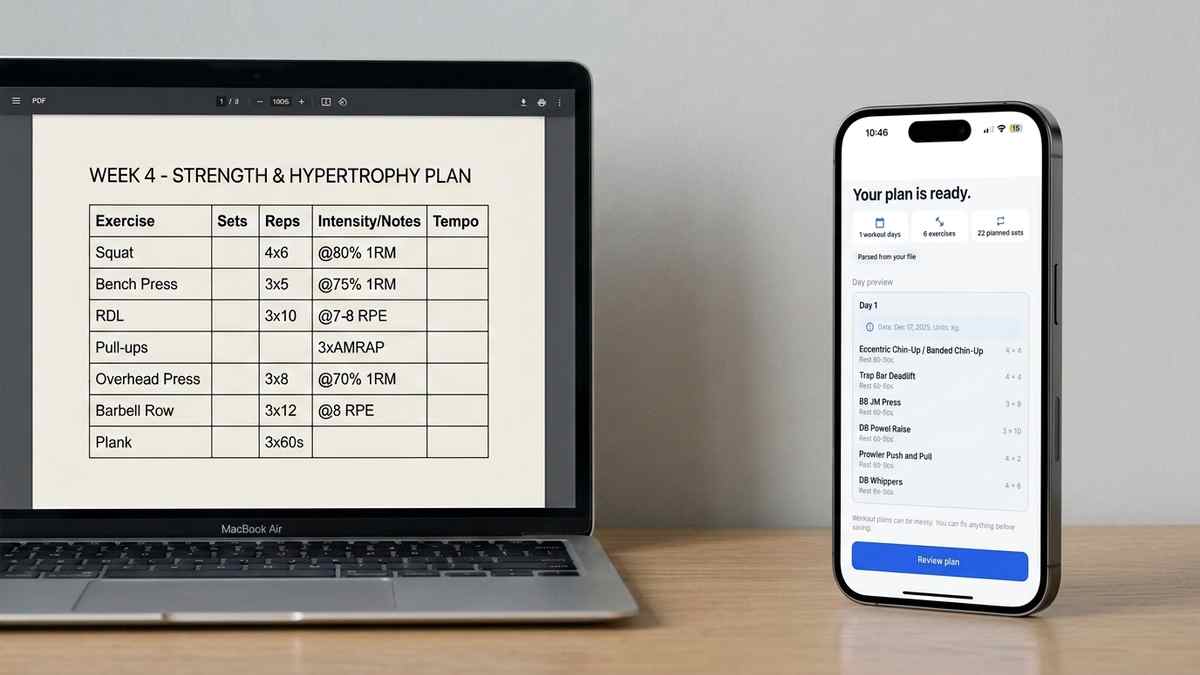
Coach PDF Workout Plan App: How to Track It Without Retyping
Got a coach PDF workout plan? See what an app needs to handle it well, and how Repport turns the file into a loggable session in seconds.
Read moreHow nSuns 5/3/1 LP differs from standard 5/3/1, its T1/T2 structure, weekly training max progression, and how to track a cycle in an app.
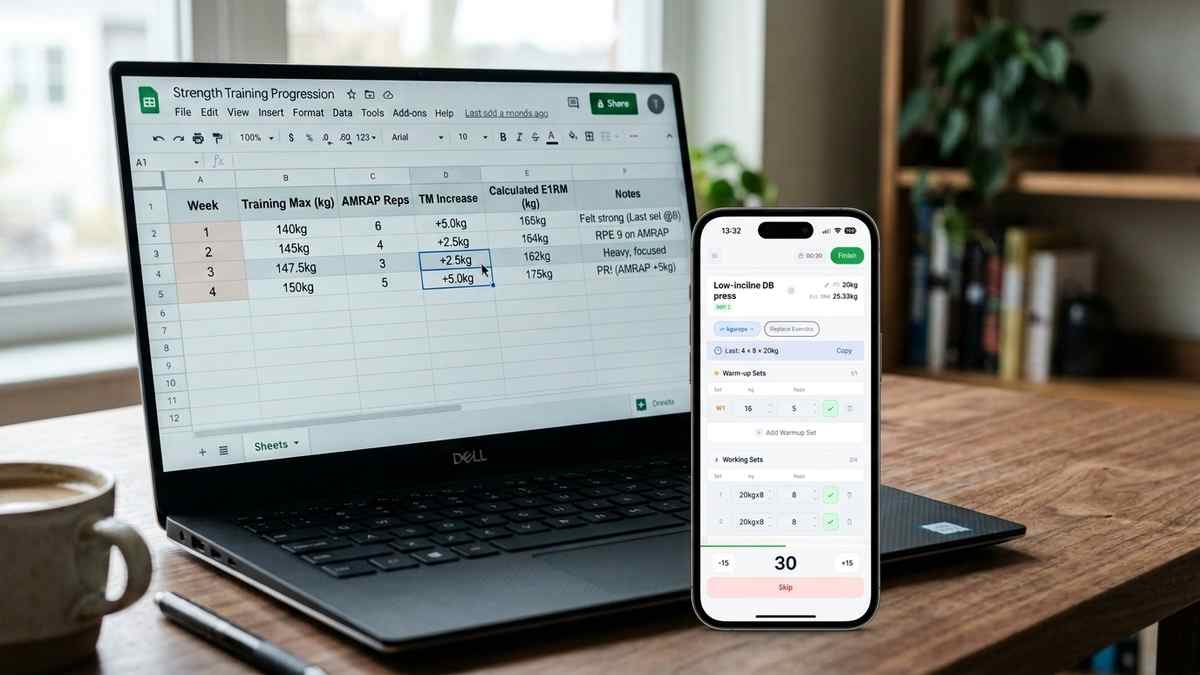
nSuns 5/3/1, often just called nSuns or nSuns LP, takes Jim Wendler’s 5/3/1 percentages and turns them into a weekly-progression, high-volume program. If you’ve already run standard 5/3/1 and want to know what’s different before switching, or you’re trying to track an nSuns spreadsheet in an app, here’s how the program actually works.
nSuns LP was built by a lifter using the handle u/dmoney12, combining 5/3/1’s percentage-based structure with the higher set counts associated with Sheiko-style programming. The result is a program that still uses a training max the way Wendler’s does, but pushes far more total volume per session and adjusts that training max every single week instead of every cycle.
Each training day centers on one main lift, called T1, followed by a related secondary lift, called T2. A 5-day version runs squat, bench, deadlift, and overhead press as dedicated T1 days, with bench appearing twice under different set schemes. Shorter 4-day and longer 6-day variants exist too, trading some sessions for more focus on specific lifts.
The training max itself is calculated the same way as standard 5/3/1: 90% of your tested or accurately estimated one-rep max. What nSuns changes is what happens to that number after your first session.
A T1 day is a ladder of roughly 9 work sets. It opens with lighter volume sets, climbs to a heavy top set, and includes one all-out AMRAP set, typically somewhere in the 85-95% training max range depending on which day’s scheme you’re running. That AMRAP set is the one that decides your training max adjustment for next week, so it isn’t just another working set to grind through.
T2 work follows on the same day: a second, lighter compound lift, run for around 8 sets at higher rep ranges without an AMRAP set. It’s there to add volume and carryover to the main lift without adding the fatigue cost of another near-maximal effort.
Exact set-by-set percentages vary slightly between the different published nSuns spreadsheet versions, since the program has been iterated on by the community over the years. The ladder shape, ramp up, hit a heavy AMRAP, then back off, stays consistent across versions.
This is the part that makes nSuns feel different week to week. Your AMRAP set result on the T1 lift sets next week’s training max directly:
This is consistent across the major nSuns spreadsheet versions. Because progression is tied to actual weekly performance rather than a fixed monthly jump, two lifters running the same nSuns variant can end up on noticeably different training maxes within a few months, purely based on how their AMRAP sets went.
The 6-day variants push this further by giving squat or deadlift a third weekly exposure, which speeds up progression on that specific lift at the cost of more total recovery demand.
nSuns is almost always run from a shared spreadsheet, since the weekly training max math and the T1/T2 set schemes are easier to maintain in cells with formulas than to recalculate by hand each session. That’s convenient for building the program, less convenient for actually logging 17 working sets across two lifts mid-workout on a laptop or a cramped phone browser tab.
If your nSuns spreadsheet lives in Google Sheets or Excel, our guide on importing an Excel workout plan covers the export and import steps directly. Repport reads the sheet and turns each week’s sets into a tappable, loggable session, so the AMRAP set that actually decides next week’s numbers gets logged accurately instead of estimated from memory after the workout.
If you’re deciding between nSuns and a simpler program first, our guides to 5/3/1 for Beginners and StrongLifts 5x5 cover the lower-volume programs most lifters run before stepping up to nSuns. Our training max calculator works for nSuns the same way it does for standard 5/3/1, since both programs start from the same 90%-of-1RM number.
Standard 5/3/1 moves your training max up roughly once a month, after a 3-week wave and a deload. nSuns moves it weekly, based directly on how many reps you get on that week’s AMRAP set. It also uses far more work sets per session, around 9 on the main lift and 8 on the secondary lift, compared to 5/3/1’s 3 working sets plus assistance.
The 4-day or 5-day version, not a 6-day variant. nSuns itself isn’t a true-beginner program since the set volume is high. Lifters usually move to nSuns after outgrowing a linear progression program like StrongLifts 5x5 or a monthly-wave program like standard 5/3/1.
Getting 0-1 reps on the AMRAP set means no training max increase that week, you repeat the same numbers. This isn’t a failure state, it’s the program’s built-in ceiling that keeps the training max realistic without a separate deload week.
Standard 5/3/1 moves your training max up roughly once a month, after a 3-week wave and a deload. nSuns moves it weekly, based directly on how many reps you get on that week's AMRAP set. It also uses far more work sets per session, around 9 on the main lift and 8 on the secondary lift, compared to 5/3/1's 3 working sets plus assistance.
The 4-day or 5-day version, not a 6-day variant. nSuns itself isn't a true-beginner program since the set volume is high. Lifters usually move to nSuns after outgrowing a linear progression program like StrongLifts 5x5 or a monthly-wave program like standard 5/3/1.
Getting 0-1 reps on the AMRAP set means no training max increase that week, you repeat the same numbers. This isn't a failure state, it's the program's built-in ceiling that keeps the training max realistic without a separate deload week.
Keep reading
Got a coach PDF workout plan? See what an app needs to handle it well, and how Repport turns the file into a loggable session in seconds.
Read more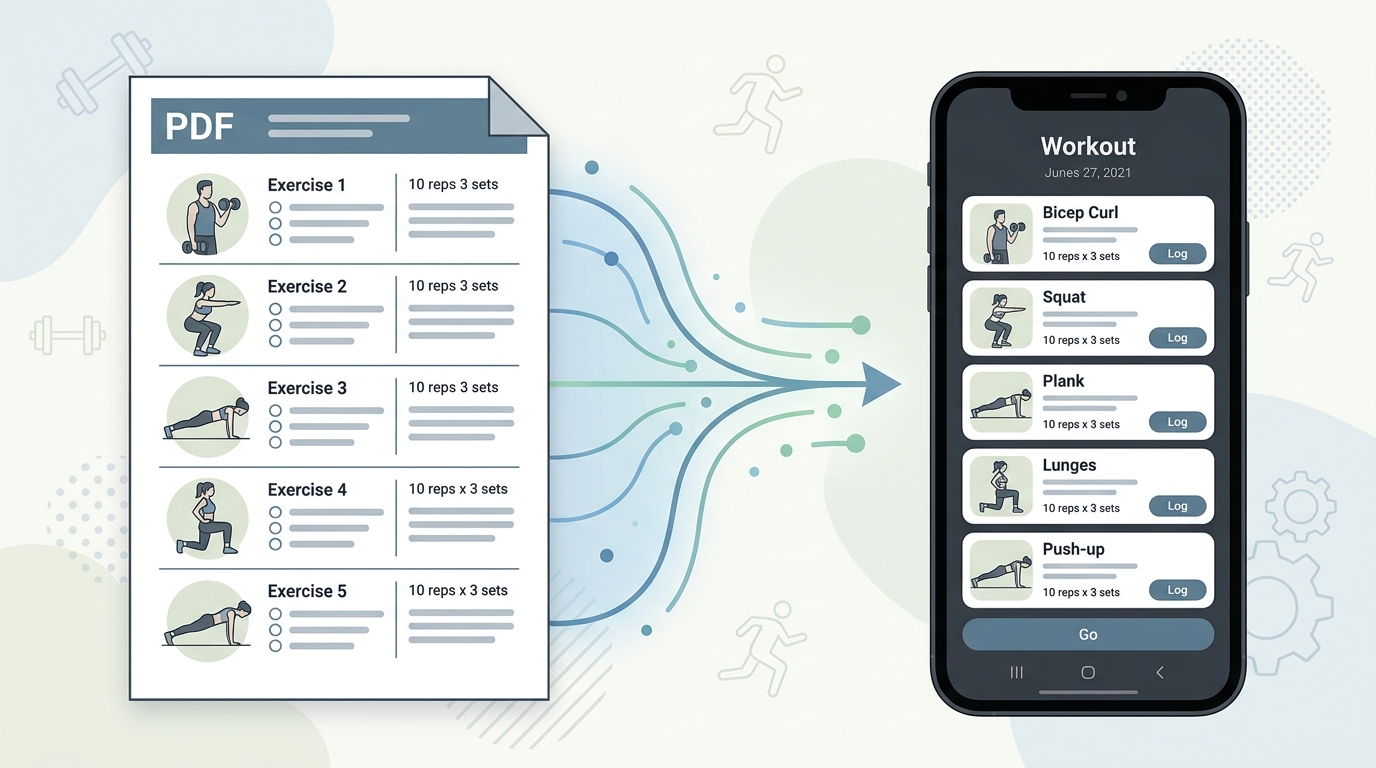
Your coach's PDF is not a training tool. Learn how to convert any workout plan PDF into a structured digital format you can log, track, and follow mid-session.
Read more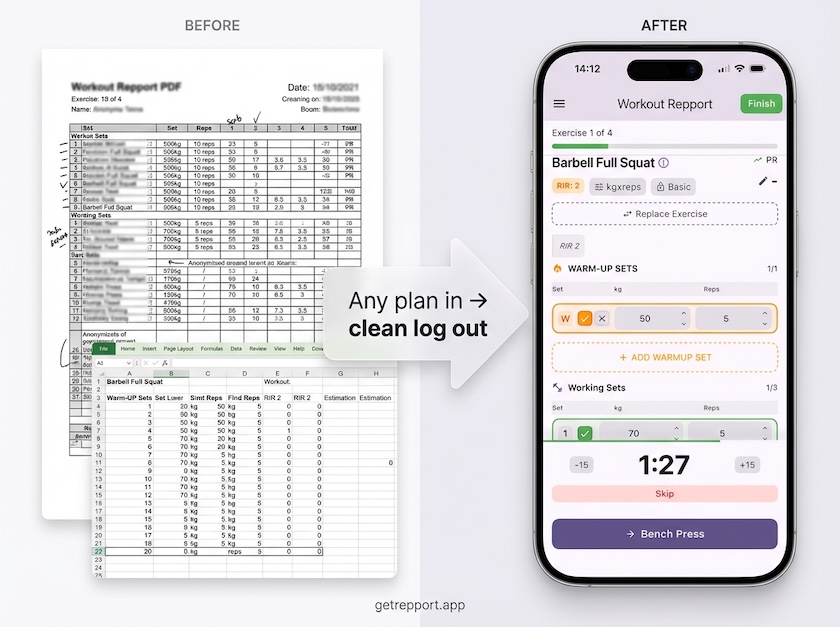
Stop training from a messy spreadsheet. Import your Excel or Google Sheets workout plan into Repport and log your sets with a mobile-first interface.
Read moreUpload your plan and get a tappable workout in minutes. Join the future of coaching execution.