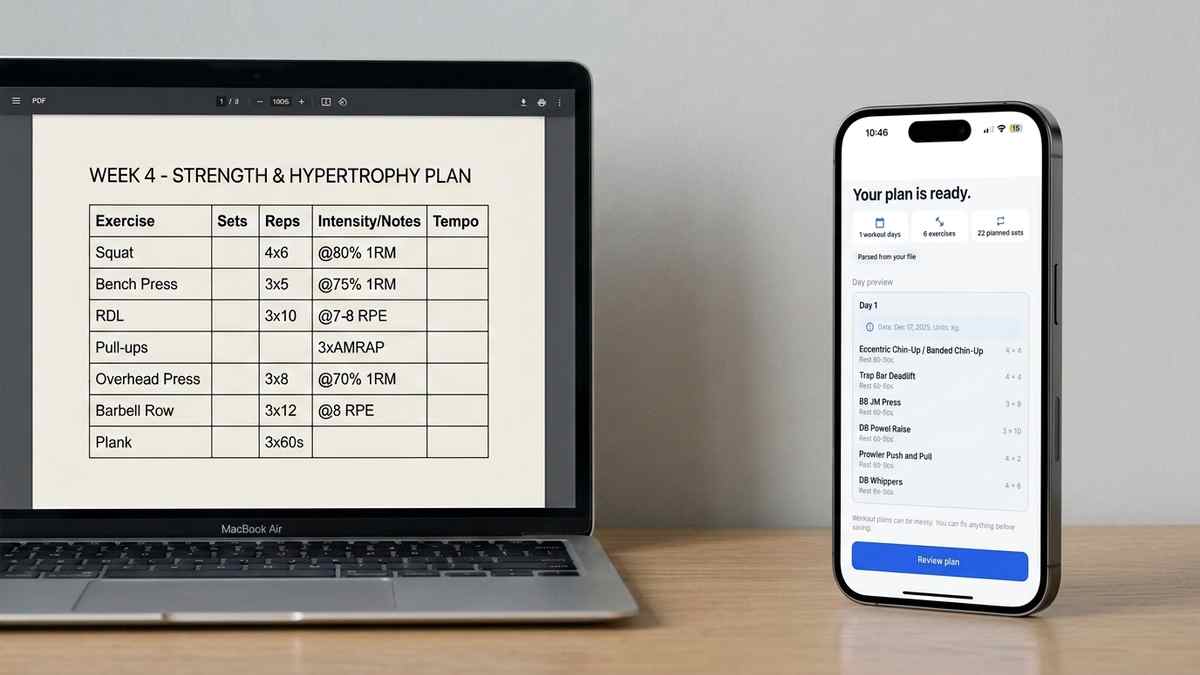
Coach PDF Workout Plan App: How to Track It Without Retyping
Got a coach PDF workout plan? See what an app needs to handle it well, and how Repport turns the file into a loggable session in seconds.
Read moreStarting Strength app guide: the A/B workout split, linear progression rule, and when to move to intermediate programming like the Texas Method.
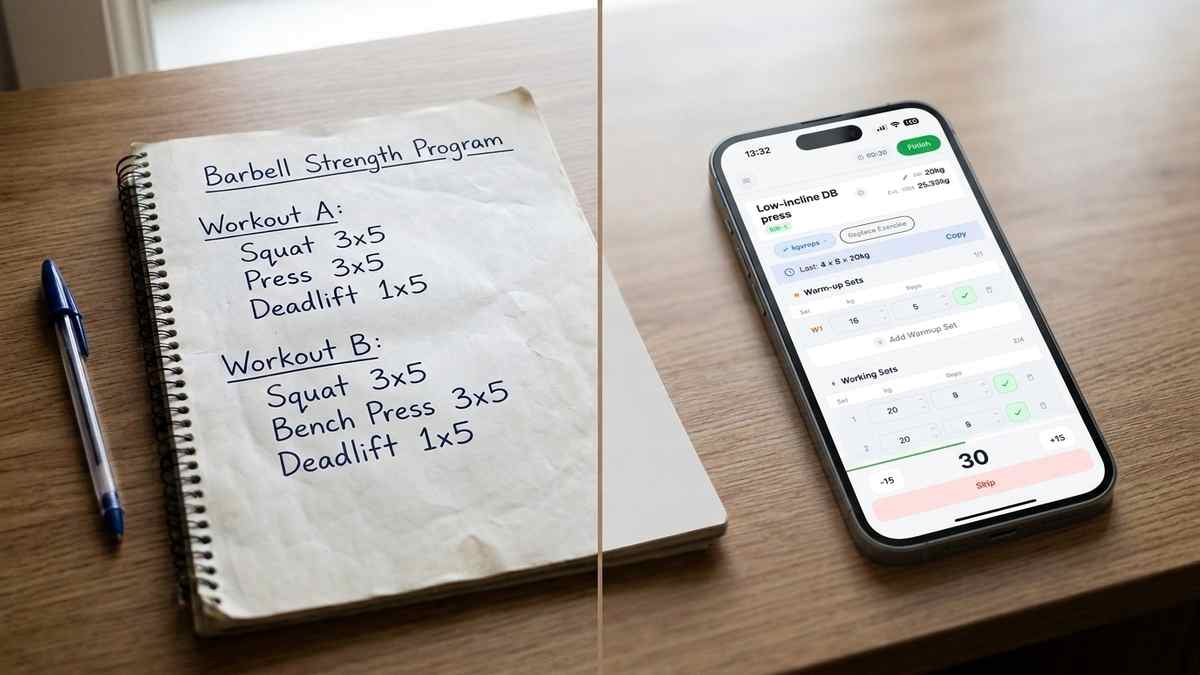
Starting Strength is Mark Rippetoe’s novice barbell program built around three lifts done three times a week: squat, an alternating overhead press or bench press, and deadlift. If you’ve started the program on a printed handout or a spreadsheet and want to know how it’s structured before you track it properly, here’s how it works.
Starting Strength trains a small set of compound barbell lifts at high frequency instead of spreading volume across many exercises. The squat is trained every session, three times a week, because Rippetoe treats it as the single most useful lift for building total-body strength in a beginner.
The full program eventually includes six lifts: squat, deadlift, bench press, overhead press, power clean (or power snatch), and chin-ups. New lifters usually start with the core four, squat, press, bench, deadlift, and add power cleans once the basic pattern is established.
The training principle is linear progression. Every time you train a lift and complete all the prescribed sets and reps, you add weight next session, typically 2.5-5 kg (5-10 lb) on squat and deadlift, and smaller jumps on the upper body press. If you fail to hit the reps, you repeat the same weight next time instead of adding more.
This is what makes Starting Strength a genuine novice program rather than a general strength template: the linear jump only works while your body can recover fully between three weekly sessions, which is typically true for a beginner and stops being true after a few months.
Training runs three non-consecutive days a week, commonly Monday, Wednesday, Friday, alternating two workouts. In week one you run A, B, A. In week two you run B, A, B, so each workout gets used roughly the same number of times.
Both workouts open with squat, 3 sets of 5. The upper body press alternates: Workout A uses the overhead press, Workout B uses the bench press. So if you press on Monday, you bench Wednesday, press again Friday, then bench Monday of the following week.
Both workouts close with deadlift, but only one work set of 5 reps. This is deliberate. A heavy set of 5 deadlifts already asks a lot of a novice lifter’s recovery, and Rippetoe’s program doesn’t add sets on top of it the way it does for squat and press.
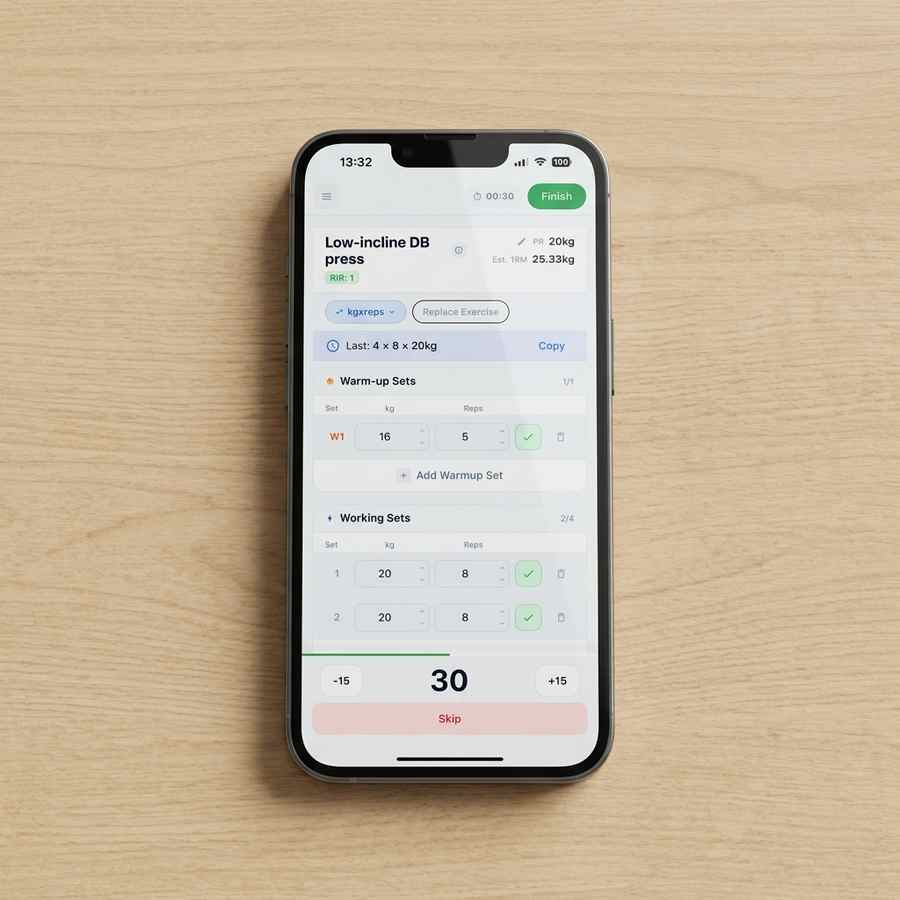
This is also where tracking a plan properly matters. A three-lift session that alternates week to week is easy to lose track of on paper, and it’s exactly the kind of plan Repport is built to hold: upload the written program once and each alternating session shows up pre-structured, so you’re not re-deriving whether today is a press day or a bench day.
Linear progression has a ceiling. At some point you’ll fail to complete a session’s prescribed reps even after a short deload, typically a reduction in weight followed by a slower climb back up. When that happens on a given lift, that lift has stalled.
Stalls happen lift by lift, not all at once. It’s common to still be adding weight to your squat and deadlift on the original linear progression while your bench press or overhead press has already moved to an intermediate structure. There’s no single day where the whole program switches over.
The most common next step is the Texas Method, which trades daily linear jumps for weekly progression: a heavier volume day, a lighter recovery day, and an intensity day where you attempt a new heavy set for the week. New weekly personal records on this structure are realistic for roughly 4-8 months before an intermediate lifter needs a further program change, according to Starting Strength Method sources. Jumping into it too aggressively right after finishing linear progression is a common mistake, a brief 1-3 week easier stretch first lets accumulated fatigue settle before starting the new demands.
For lifters comparing structures at this stage, it’s worth reading how nSuns 5/3/1 handles weekly training max adjustments, since it solves a similar “beyond linear progression” problem with a different mechanism.
Both workouts open with the squat, 3 sets of 5. The difference is the upper body press: Workout A uses the overhead press, Workout B uses the bench press, alternating each session. Both workouts finish with one set of 5 deadlifts.
A single heavy set of 5 deadlifts is taxing enough on its own for a novice lifter. Adding more sets doesn’t add meaningful strength benefit at this stage, it just adds fatigue that slows recovery before the next session. This is why Starting Strength programs one work set instead of the three used for squat and press.
When you can no longer add weight session to session on a lift, even after a short deload, that lift has stalled. Lifts stall one at a time, not all together, so you might move your upper body lifts to weekly progression while squat and deadlift are still climbing on the original linear progression.
If you’re following Starting Strength from a coach’s handout, a spreadsheet, or a forum post, getting the alternating A/B structure into an app removes the guesswork of remembering which session comes next. Read more on how to import a PDF workout plan or how to get a coach’s plan into an app if that’s the format you’re starting from.
Both workouts open with the squat, 3 sets of 5. The difference is the upper body press: Workout A uses the overhead press, Workout B uses the bench press, alternating each session. Both workouts finish with one set of 5 deadlifts.
A single heavy set of 5 deadlifts is taxing enough on its own for a novice lifter. Adding more sets doesn't add meaningful strength benefit at this stage, it just adds fatigue that slows recovery before the next session. This is why Starting Strength programs one work set instead of the three used for squat and press.
When you can no longer add weight session to session on a lift, even after a short deload, that lift has stalled. Lifts stall one at a time, not all together, so you might move your upper body lifts to weekly progression while squat and deadlift are still climbing on the original linear progression.
Keep reading
Got a coach PDF workout plan? See what an app needs to handle it well, and how Repport turns the file into a loggable session in seconds.
Read more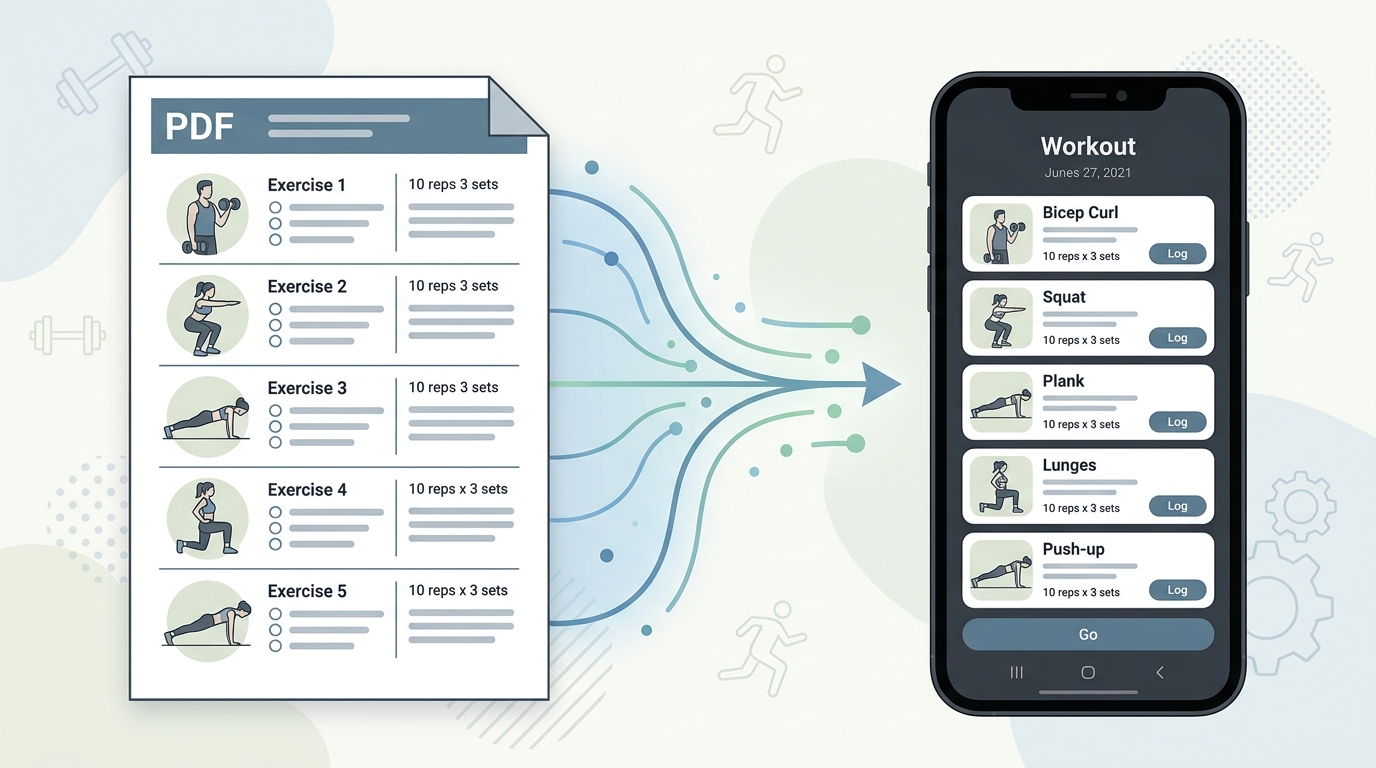
Your coach's PDF is not a training tool. Learn how to convert any workout plan PDF into a structured digital format you can log, track, and follow mid-session.
Read more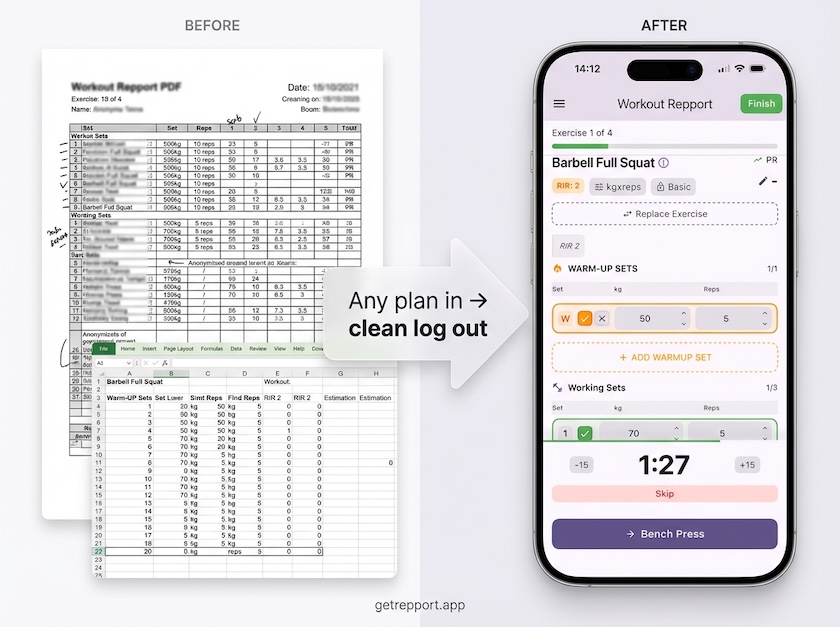
Stop training from a messy spreadsheet. Import your Excel or Google Sheets workout plan into Repport and log your sets with a mobile-first interface.
Read moreUpload your plan and get a tappable workout in minutes. Join the future of coaching execution.